Medical Book Icon: A Designer’s Review for Embroidery
As an experienced designer who has spent countless hours digitizing and reviewing machine embroidery design files, I have learned that simplicity is often the hardest quality to achieve. When I first opened the file for Medical Book, my immediate reaction was one of appreciation for its clean lines. This is not a complex, photo-realistic rendering; it is a vector icon, distilled into its most essential form. For those of us working in the world of Graphics and tangible textiles, this distinction matters immensely. The download includes an SVG format, which serves as an excellent starting point for understanding the shape before we even think about thread paths.
First Impressions: Clarity Over Complexity
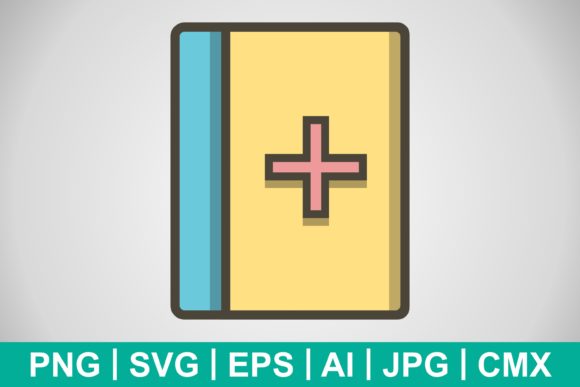
The Medical Book design features a straightforward representation of a closed book, likely symbolizing medical knowledge, nursing studies, or healthcare education. The mood it creates is professional, academic, and trustworthy. It does not scream for attention with chaotic details; instead, it offers a quiet confidence. In the realm of Icons, this is exactly what you want. When translating this to fabric, the lack of excessive internal detail is a significant advantage. Complex designs often suffer from thread breaks and puckering, especially on smaller items. This design, by virtue of its minimalism, avoids many of those pitfalls.
Visually, the layout is balanced. The spine and cover are clearly defined, providing enough structure to be recognizable even at a reduced size. For embroidery designers, this means the transition from digital screen to stitched fabric should be relatively smooth, provided the digitizing respects the original vector’s integrity. The visual personality is neutral enough to fit various color schemes, yet specific enough to convey its theme instantly.
Real-World Application: The Nursing Student Tote
To truly evaluate Medical Book, I imagined a real-life scenario. Picture a custom order from a local nursing student graduating from her program. She wants a durable, stylish tote bag to carry her textbooks and stethoscope. This is where Medical Book shines as a tote bag design. Because the icon is simple, it can be scaled up to a prominent size on the front of a canvas tote without becoming pixelated or losing definition.
In this context, I would recommend using a bold thread color, such as navy blue or surgical green, against a natural beige or white canvas. The contrast ensures the embroidery file reads clearly from a distance. If I were stitching this for a handmade product line, I might pair it with a subtle monogram of the student’s initials below the icon. This combination transforms a simple graphic into a personalized gift that feels thoughtful and high-value. The customer isn’t just buying a bag; they are buying a symbol of their hard-earned achievement.
Versatility Across Product Lines
Beyond tote bags, this design has strong potential in custom apparel. Imagine it embroidered on the left chest of a scrub top or a polo shirt. Here, the size would be much smaller, perhaps two inches wide. The simplicity of the Medical Book icon ensures it remains legible even at this diminutive scale. Intricate designs often turn into a blob of thread when shrunk down, but this icon retains its shape. It works equally well for sweatshirt embroidery, where a larger, centered placement can make a bold statement for medical study groups or hospital departments.
For Etsy sellers and small shop product creators, this asset is versatile. It fits naturally into categories like graduation gifts, nurse appreciation week merchandise, or back-to-school collections for medical students. It can also be adapted for embroidered patch creation. A satin stitch border around the icon would give it a finished, professional look suitable for iron-on or sew-on applications. This adaptability makes it a valuable addition to any library of design assets.
Technical Considerations and Stitching Advice
While the design is simple, successful execution depends on technical precision. Since the source is an SVG, you will need to digitize it or use auto-digitizing software with caution. Auto-digitizing often creates inefficient stitch paths. For a professional finished product, I recommend manually adjusting the stitch types. Use a satin stitch for the outline and spine to create a smooth, raised texture. For the cover area, a light fill stitch or even a simple running stitch pattern can add texture without adding bulk.
Stitch density is critical here. Too dense, and the fabric will pucker, especially on thinner materials like t-shirts or baby clothes. Too loose, and the backing fabric might show through. I always advise testing the design on scrap fabric first. Check how the thread interacts with the material. If you are working with a textured fabric like a towel or fleece, you may need to increase the stitch count slightly to ensure coverage.
Fabric and Hoop Constraints
When using Medical Book on stretchy fabric or knits, proper stabilization is non-negotiable. A cut-away stabilizer is usually best for garments that will be washed frequently, as it provides lasting support. For woven fabrics like cotton twill or canvas, a tear-away stabilizer might suffice, but always test first. If you are stitching on dark fabric, consider using a lighter underlay or ensuring your top thread has enough sheen to stand out. Matte threads can sometimes get lost on dark backgrounds if the lighting is poor.
Be cautious with very small hoop size constraints. While the icon is small, ensure you have enough margin around the design for the hoop to grip the fabric securely without crushing the stitches. If you are placing it on a curved surface, like a cap, use a cap frame and ensure the design is centered perfectly. Misalignment is much more noticeable on simple shapes than on complex, busy patterns.
Enhancing Brand Value and Customer Trust
From a business perspective, using clean, professional Icons like Medical Book enhances brand consistency. It signals to your customers that you pay attention to detail. A sloppy, over-digitized design can make a craft business look amateurish. In contrast, a crisp, well-stitched icon builds trust. It suggests that the commercial embroidery work is of high quality, encouraging repeat business and positive reviews.
For digital embroidery file sellers, offering this type of versatile icon can attract a wide range of buyers. However, always clarify licensing terms. Since this is a vector icon, ensure that your end users understand whether they can sell finished physical items or if there are restrictions. Transparency protects both you and your customers.
Final Verdict for Makers and Designers
The Medical Book design is a solid choice for anyone looking to add a touch of professional flair to their embroidery projects. It is not flashy, but it is effective. Its strength lies in its adaptability and clarity. Whether you are creating a holiday embroidery gift for a doctor, a baby embroidery item for a new nurse mom, or a bulk order for a hospital clinic, this design holds up.
Remember to treat the SVG as a blueprint, not a final stitch file. Take the time to refine the digitizing, choose your thread colors wisely, and respect the fabric texture. By doing so, you transform a simple graphic into a tangible piece of art that resonates with your audience. For creative entrepreneurs and hobbyists alike, this is a design that rewards careful execution with a polished, professional result.