Icon Medical: A Designer’s Practical Review
As a designer who spends more time staring at stitch simulations than I care to admit, I have learned that not every graphic translates well to thread. We often fall in love with a clean vector on our screens, only to watch it turn into a tangled mess of bobbin thread on the hoop. That is why I approached Icon Medical with a healthy dose of skepticism and a lot of curiosity. This is not just another clipart bundle; it is a set of Graphics intended for real-world application. After putting these files through their paces on various fabrics and hoop sizes, I am ready to share my honest assessment of how this collection holds up in a professional embroidery environment.
First Impressions and Visual Personality
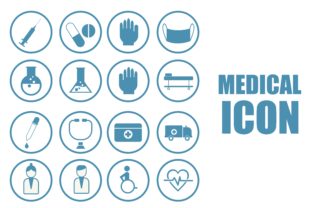
The first thing that strikes you about Icon Medical is its clarity. In the world of Icons, simplicity is king, but there is a fine line between simple and bland. These designs strike a balance that feels professional without being sterile. The lines are crisp, and the shapes are distinct, which is crucial when you are working with the physical limitations of an embroidery machine. Whether you are creating a subtle chest logo for a clinic uniform or a bold statement piece for a healthcare-themed tote bag, the visual personality here is authoritative yet approachable.
I particularly appreciated the layout of the elements. They are spaced in a way that respects the integrity of the fabric. Too often, I see machine embroidery design files that are packed so tightly that the fabric puckers immediately upon stitching. With Icon Medical, the breathing room between elements suggests that the creator understands the mechanics of stitching. It feels like a collection designed by someone who has actually threaded a needle, not just drawn a shape.
Real-World Application: The Clinic Tote Test
To truly evaluate a design, you have to stitch it. I decided to test Icon Medical on a heavy canvas tote bag, a popular item for Etsy sellers and small shop product lines. The goal was to create a durable, professional-looking bag for a local nursing student. I chose a medium-weight cotton canvas, which is forgiving but can show tension issues if the design is too dense.
The result was impressive. The design sat flat on the fabric, with no significant pulling or distortion. Because the files include JPG, EPS, and SVG formats, I was able to preview the scale accurately before digitizing or converting for my specific machine. For those using dedicated embroidery software, the SVG provided a clean path for auto-digitizing, though I always recommend manual tweaking of stitch types. The final finished product looked sharp. The medical symbols were instantly recognizable, adding a layer of professionalism to what could have been a generic accessory. This is exactly the kind of quality that builds customer trust and encourages repeat business for craft business owners.
Navigating Fabric and Hoop Constraints
While Icon Medical performs well on stable fabrics like canvas and twill, I would advise caution when moving to more challenging materials. If you are planning to use these design assets on stretchy performance wear or thin silk blends, you must pay attention to your stabilizer choice. A cut-away stabilizer is non-negotiable for stretchy fabrics to prevent the design from warping after washing.
Additionally, consider the hoop size. These icons are versatile, but if you are shrinking them down for a tiny left-chest logo on a polo shirt, you need to check the detail level. Tiny details can get lost in the stitch density. I recommend running a test stitch-out on scrap fabric first. This is especially true if you are using a satin stitch border. On smaller scales, a running stitch might provide better definition than a thick satin column, which can bunch up if the angle is not perfect. For baby embroidery projects, such as onesies or bibs, ensure that the back of the stitching is covered with a soft backing to prevent irritation against sensitive skin.
Commercial Viability for Makers and Sellers
For commercial embroidery professionals and digital product sellers, the value of Icon Medical lies in its versatility. Healthcare is a massive market. From nurse appreciation gifts to hospital fundraiser merchandise, the demand for high-quality medical imagery is constant. Having a reliable set of icons that look good on both dark and light fabrics is a significant asset.
When creating printable mockup images for your online store, the clean lines of these graphics translate beautifully. They do not look pixelated or messy in photos, which helps in selling the handmade product. Whether you are offering custom apparel for a medical conference or creating embroidered patch designs for scrubs caps, these icons provide a consistent brand aesthetic. Consistency is key for brand consistency and recognition. If a customer sees your work on a tote bag and then on a sweatshirt, they should recognize the quality and style immediately.
Technical Considerations for Best Results
- Thread Color Contrast: Medical icons often rely on white, blue, or red threads. Ensure your thread color contrasts sufficiently with your fabric. A white cross on a light gray shirt will vanish. Use a contrasting underlay or choose a darker fabric for better visibility.
- Stitch Density: Check the density settings in your software. If the design feels too stiff after stitching, reduce the density slightly. This is crucial for items like towel or apron projects where flexibility is desired.
- File Formats: The inclusion of JPG, EPS, and SVG is helpful. However, remember that these are graphic files, not native embroidery files like PES or DST. You will need to digitize them or convert them using your preferred software. Always inspect the generated stitches for jumps and trims before sending them to your machine.
- Licensing: Before selling any personalized gift or holiday embroidery item featuring these designs, confirm the licensing terms. Ensure you have the right to use the digital embroidery file derivative for commercial sales.
Final Verdict on Icon Medical
In an industry flooded with low-quality clipart, Icon Medical stands out as a practical, usable resource for serious makers. It is not just about having a pretty picture; it is about having a design that respects the medium of embroidery. The clean lines, thoughtful spacing, and professional aesthetic make it a strong candidate for a wide range of projects, from sweatshirt embroidery to boutique branding materials.
For the hobbyists and creative entrepreneurs out there, this collection offers a solid foundation for building a niche product line. Just remember to respect the technical constraints of your machine and fabric. Test your tensions, choose the right stabilizer, and always stitch out a sample. When used correctly, Icon Medical can elevate your embroidery project from a homemade craft to a professional-grade product that customers are proud to wear and use.