Reviewing the Paramedic EMS Star of Life for Embroidery
As a designer who spends half my life digitizing and the other half stitching, I have learned that not every graphic translates well to thread. We often see stunning Illustrations and Graphics online that look incredible on a screen but turn into a tangled mess under the needle. Recently, I took a close look at the Paramedic EMS Star of Life design to determine if it holds up in a real-world embroidery environment. This is not just about whether the image is pretty; it is about whether it functions as a viable machine embroidery design for client work, personal projects, or small business inventory.
First Impressions: Symbolism Meets Structure
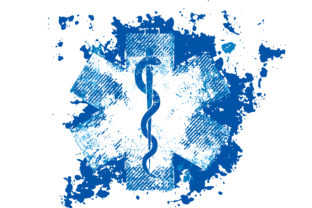
The Star of Life is one of the most recognizable symbols in emergency medicine. It carries weight, authority, and immediate recognition. When I first opened the files for the Paramedic EMS Star of Life, my primary concern was the integrity of the six-pointed star and the central Rod of Asclepius. In many low-quality digital embroidery file packages, these intricate details are lost or simplified to the point of unrecognizability. However, this design maintains the sharp, authoritative geometry required for such a significant emblem.
The mood here is professional and urgent. It is not whimsical. This distinction matters because it dictates where the design belongs. You would not stitch this on a playful baby blanket unless it was specifically requested for a medical family heirloom. Instead, it screams utility and pride. It feels right at home on workwear, caps, and gear bags. The visual personality is clean and bold, which is exactly what you want when dealing with a symbol that needs to be read from a distance.
The Real-World Test: A Custom Tote Bag Scenario
To truly evaluate an embroidery project, you have to imagine it on fabric. I recently had a request from a local EMT training cohort wanting matching gear. They needed something durable, visible, and professional. I decided to test the Paramedic EMS Star of Life on a heavy-duty canvas tote bag design. This is a common request for Etsy sellers and craft business owners who cater to first responders.
The experience was telling. Because the design relies on strong lines rather than subtle shading, it translated beautifully onto the textured canvas. The fill stitch areas covered the fabric weave effectively without sinking in, provided I used the correct stabilizer. For this application, a cut-away stabilizer was non-negotiable to maintain the shape of the star points over time. The result was a crisp, high-contrast logo that looked like it belonged there. It did not look like a sticker applied to the bag; it looked integrated. This level of integration is what turns a simple handmade product into a premium finished product that customers trust.
Versatility Across Apparel and Accessories
Beyond tote bags, I evaluated how this embroidery file might perform on other common substrates. The versatility of the Paramedic EMS Star of Life is one of its strongest assets for commercial embroidery professionals.
- Caps and Hats: The curved surface of a cap is tricky. The star’s symmetry helps here, but the center rod requires careful hooping. If the design is too wide, it will distort on the front panel. I recommend checking the width against your specific cap hoop before committing.
- Sweatshirt Embroidery: On fleece or cotton blends, this design shines. The bold lines prevent the "pilling" effect where stitches get lost in fluffy fabric. It makes for an excellent custom apparel item for team uniforms.
- Embroidered Patch: This is perhaps the best use case. The design is self-contained and does not rely on the background fabric for context. Creating a merrow-edge patch with this graphic allows for mass production and easy application to jackets or bags later.
- Aprons and Work Gear: For medical professionals who wear scrubs or utility aprons, this adds a touch of personalized pride. It works well as a chest-left placement, provided the size is scaled down appropriately.
Technical Considerations for Designers
While the aesthetic is strong, technical execution is where projects live or die. Here are my practical notes for anyone planning to use this design assets package.
Stitch Density and Detail: The Star of Life has intersecting lines. In embroidery, overlapping stitches can cause bulk and thread breaks. I noticed that the center of the star, where the snake and staff intersect, requires precise stitch density management. If you are editing the file, ensure there is adequate pull compensation. If you are using it as-is, test it on scrap fabric first. Look for gaps or excessive bunching in the center.
Thread Colors: Do not assume blue and white are your only options. While the traditional EMS colors are blue and white, many departments use specific color codes. This design allows for creative thread colors experimentation. However, avoid low-contrast combinations. A navy thread on black fabric will vanish. Always test your color palette on the actual fabric you intend to use.
Fabric Texture and Stability: This design is not ideal for thin, stretchy fabrics like lightweight jersey or silk. The dense fills will pucker the material. It performs best on stable, medium-to-heavy weight fabrics. If you must stitch on a baby embroidery item, use a high-quality cut-away stabilizer and consider reducing the stitch count if your software allows, to keep the garment soft.
Commercial Viability and Brand Trust
For small shop product creators and Etsy seller accounts, the perceived value of the final item is crucial. The Paramedic EMS Star of Life conveys professionalism. When a customer sees a clean, well-stitched emblem of their profession, it builds immediate trust. It suggests that the maker understands the significance of the symbol.
This is particularly important for personalized gift markets. Whether it is a holiday embroidery gift for a paramedic dad or a retirement present for a long-serving EMT, the accuracy of the design matters. Sloppy stitching or distorted proportions can be seen as disrespectful to the profession. Therefore, taking the time to hoop correctly and trim jumps is not just about aesthetics; it is about respect.
Important Licensing and File Checks
Before you list any printable mockup or sell a finished product, you must verify the license. The product description mentions SVG and PNG files, which are typically used for sublimation or print-on-demand, but we are discussing embroidery. Ensure you have the correct embroidery file formats (such as PES, DST, or EXP) compatible with your machine. The description notes "SVG File – PNG File 300DPI," which suggests these are primarily graphic assets. If you are an embroiderer, you may need to digitize these graphics yourself or confirm if an embroidery-specific file is included in the full package. Never assume a vector file is ready for stitching without proper digitizing.
Additionally, check the commercial use rights. Some designs are for personal use only. If you are running a craft business, selling items with this design without a commercial license can lead to legal issues. Always read the terms provided by the creator.
Final Verdict
The Paramedic EMS Star of Life is a robust, meaningful graphic that translates well to embroidery when handled with care. It is not a beginner-friendly design for tiny hoops due to its detail, but for standard sizes on stable fabrics, it delivers a professional, high-impact result. For designers and makers who respect the craft and the profession it represents, this design offers a solid foundation for creating memorable, high-value items. Just remember to test, stabilize, and verify your files before hitting the start button.